Two theories, one tall drink, and a question nobody has settled.
Ask one bartender where the name highball comes from and you will get a confident answer. Ask a second and you will probably get a different one. After more than a century of argument, the honest position is that nobody knows for certain. What we can do is set out the two main suspects, see what the evidence offers for each, and check when the drink first turns up in print.
The railway theory

This is the version you will hear most often. In the late nineteenth century, American railroads used a ball raised on a pole to tell a driver that the line ahead was clear. A ball hoisted high meant proceed, and proceed quickly. The Oxford English Dictionary records “high-ball” in exactly that sense, a signal to proceed given to a train driver, originally by raising a ball attached to a pole. As a verb, to highball still means to go fast.
It is a neat story, and the railroad term is real. The weak point is the link to the glass. No one has produced a document in which a bartender or a customer says the drink was named after the signal. The connection is plausible, but it is inferred rather than proven.
The Irish “ball” theory
The second explanation is quieter. In Ireland, a “ball” had long meant a glass of whisky, so a “high ball” was simply a tall one. Plenty of the bartenders working in New York and other American cities in the 1890s were Irish or of Irish descent, and they could have brought the word with them.
The writer H. L. Mencken, setting out the history of American slang in 1945, noted that “ball” was common bartender’s slang for a glass. The Online Etymology Dictionary leans the same way. It gives the drink as probably from “ball” meaning a drink of whiskey, with “high” because it is served in a tall glass, while noting that the railway sense was in use around the same time.
Nobody knows for certain.
What we can say with confidence
The drink, and the name, are American and belong to the 1890s. The word is heard on the stage in a play called My Friend from India in 1894. A recipe for a “High Ball” appears the following year in Chris Lawlor’s bartending book The Mixicologist, and by 1900 it sits in Harry Johnson’s Bartender’s Manual. The earliest dictionary citation is dated 1898. By 1904 the New York Times was running a piece headed “The Scotch Highball”, which tells you how quickly it caught on.
What we cannot say is who got there first. Two stories compete. One credits the English actor E. J. Ratcliffe, who is said to have ordered a Scotch and soda in a New York bar around 1894 and set the fashion going. The other belongs to the bartender Patrick Gavin Duffy, who claimed a share of the credit decades later, in a letter to the New York Times in 1927 and again in his 1934 mixer’s manual. Neither claim has been verified.
Perhaps both are right
Slang rarely has a single parent. It is entirely possible that an Irish word for a glass and an American word for speed were both in the air, and that the drink simply borrowed from whichever suited the moment. A tall glass, a lot of fizz and a quick pour: either story fits.
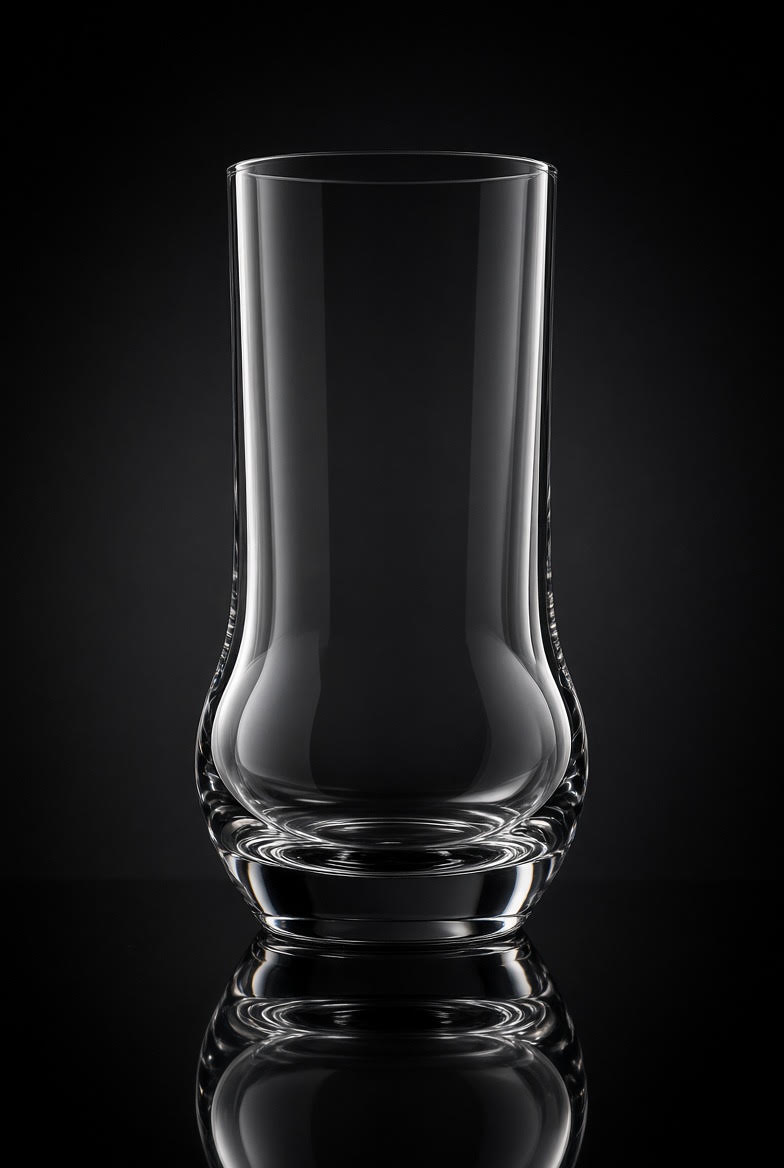
What matters more than the name is what the name was attached to. Whisky and soda had been a British habit for decades before America called it a highball. The name gave the drink an identity and carried it back across the Atlantic, and eventually on to Tokyo, where it was refined into the craft we know today.
Read the rest of The Highball Library
The Highball Inheritance – five centuries of fizz, from a monastery cellar in 1531 to the Scotch highball.
The Highball in Japan – how a Yokohama brandy and soda became the drink of a nation.
New to whisky? Download our free Whisky 101 guide.
Sources
- Online Etymology Dictionary, entry for “highball”.
- Oxford English Dictionary, “high-ball”, railway signal sense.
- H. L. Mencken, on bartender slang for a glass (1945).
- Wikipedia, “Highball (cocktail)”, for the 1890s citations.
- Evidence Anecdotal blog, “High-toned bartenders or enlightened”, on the Ratcliffe and Duffy claims.
- Dictionary.com, entry for “highball”.
© 2026 Birchwood Stanhope Limited. All rights reserved. Written by Birchwood Stanhope.